





Related documentation
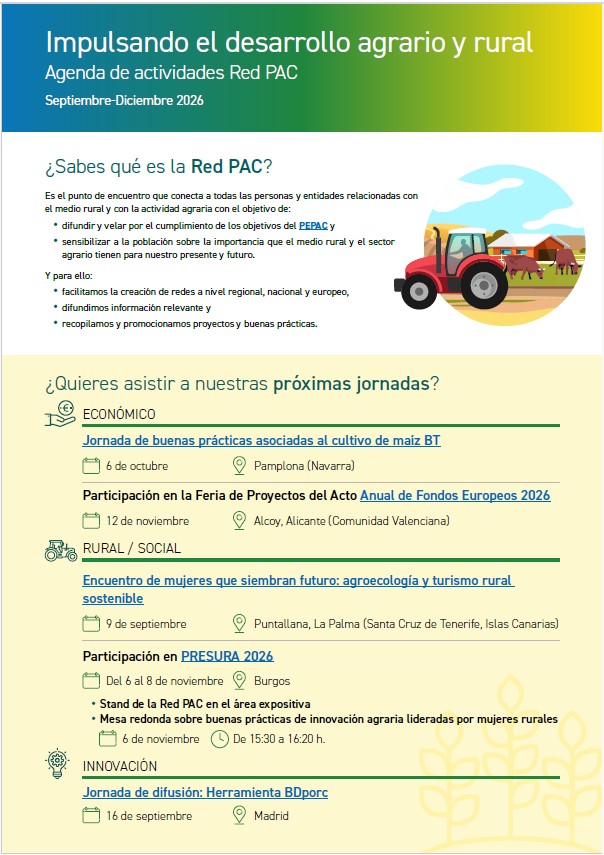 This informative document clearly and concisely presents the CAP Network's program of activities for the period from September to December 2026. Its objective is to publicize the main actions planned to further promote knowledge exchange, innovation, and sustainable development in the agricultural sector and rural areas. It includes a selection of workshops organized by the CAP Network, as well as other relevant events in which it will participate, scheduled publications, planned audiovisual materials, and initiatives promoted by the European CAP Network.
-
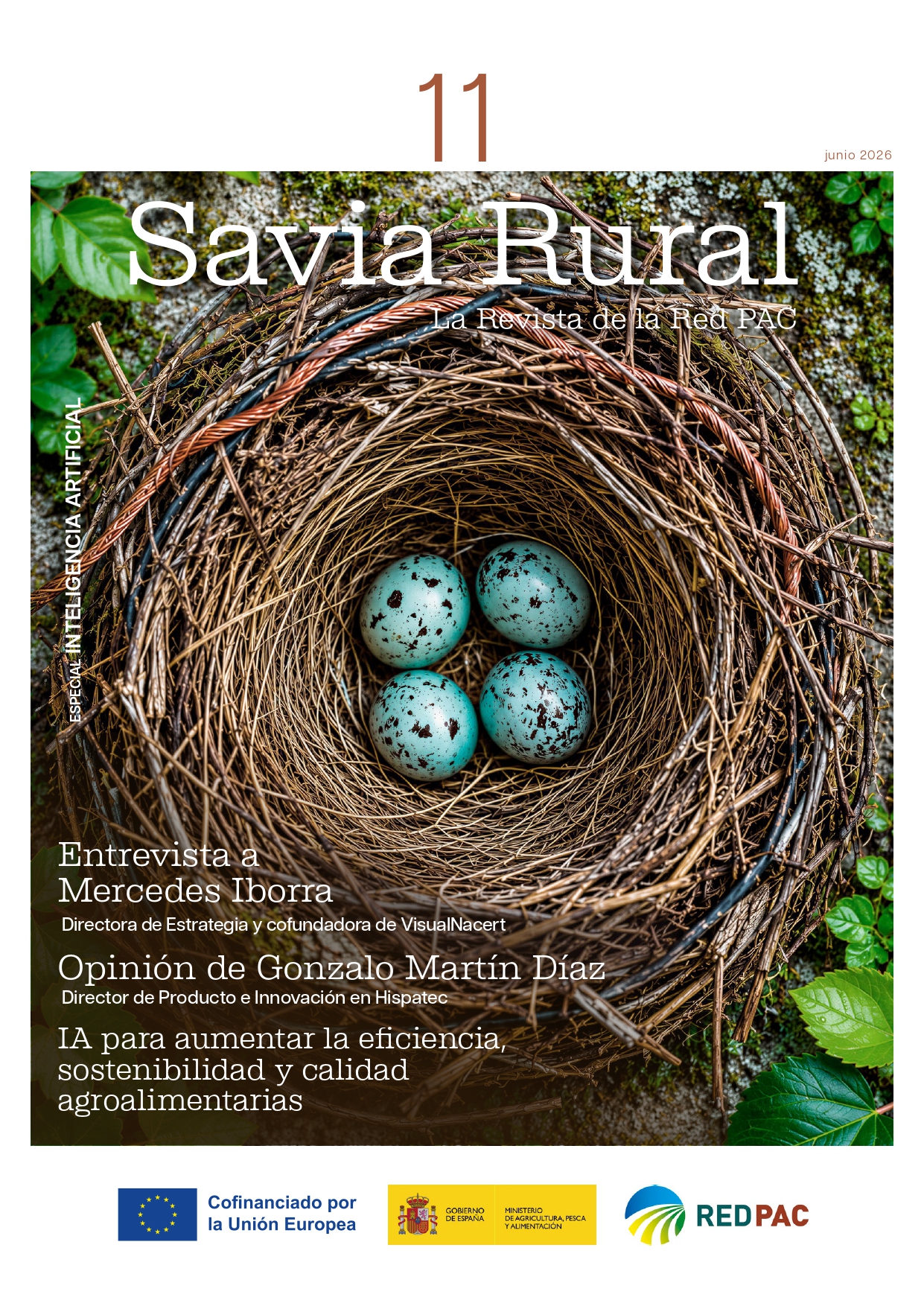 Savia Rural Magazine: Summer 2026
 -
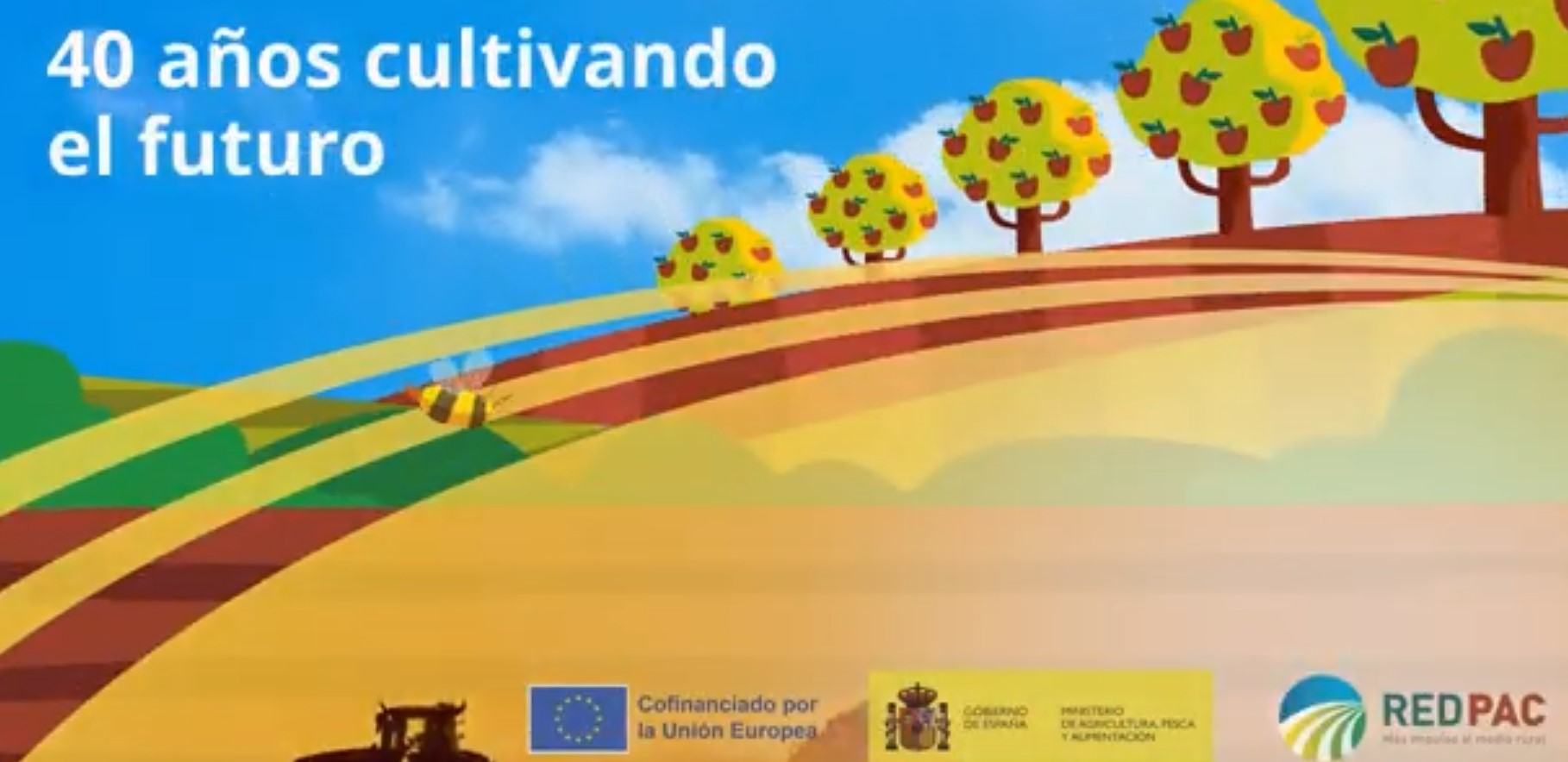 Forty years ago, Spain joined the European Union and the Spanish countryside began a historic transformation. 🌱 The arrival of the Common Agricultural Policy (CAP) boosted the modernization of the agri-food sector, support for farmers and livestock breeders, and the development of our rural villages 📊 In these four decades: ✔️ Agri-food exports have increased from 4 billion euros in 1986 to more than 78 billion euros today ✔️ More than 580,000 farmers and ranchers received CAP aid in the last year alone ✔️ More than 200 billion euros have been invested in Spanish agriculture since 1986 📌 Key…
 -
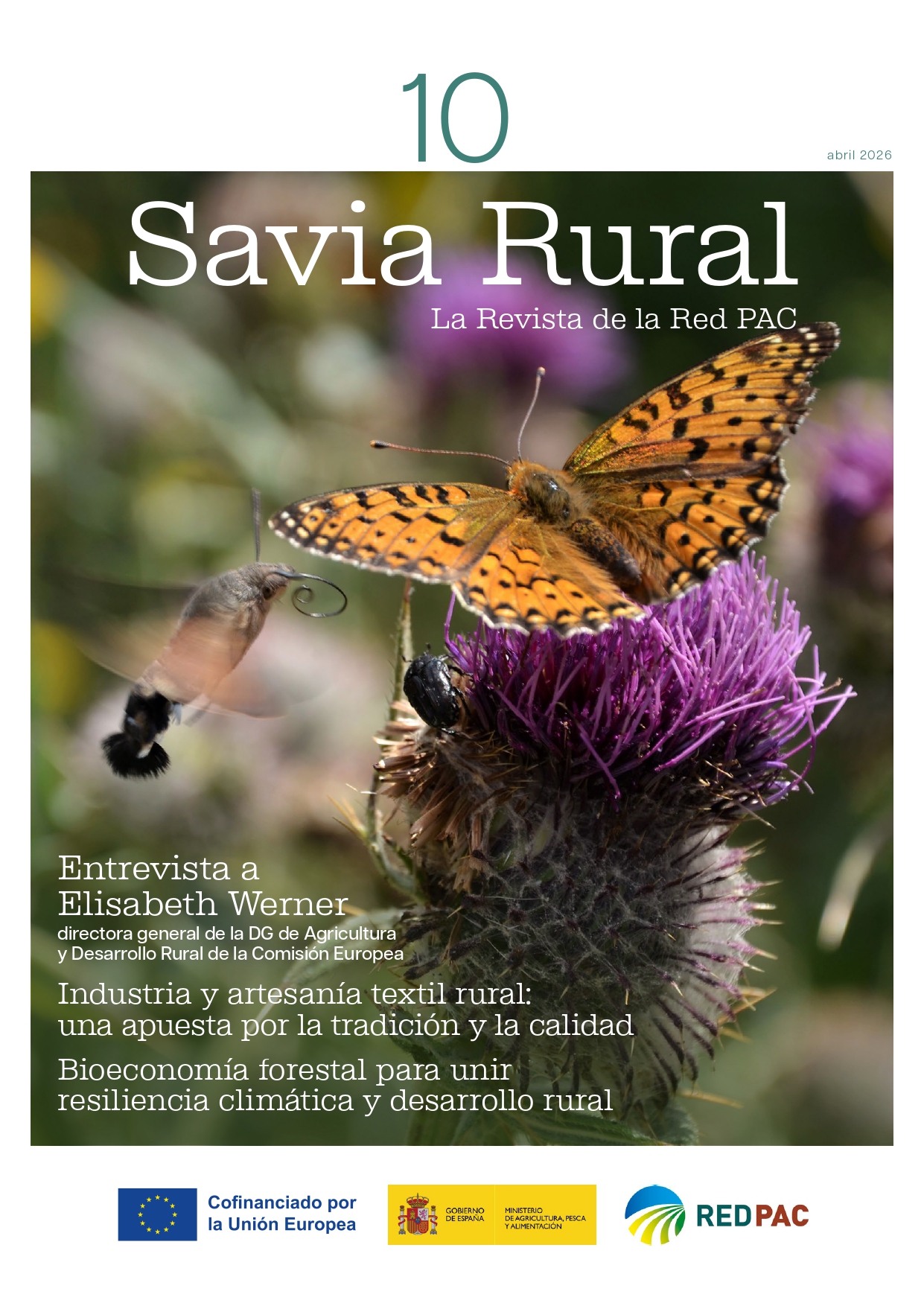 Savia Rural Magazine: spring 2026
 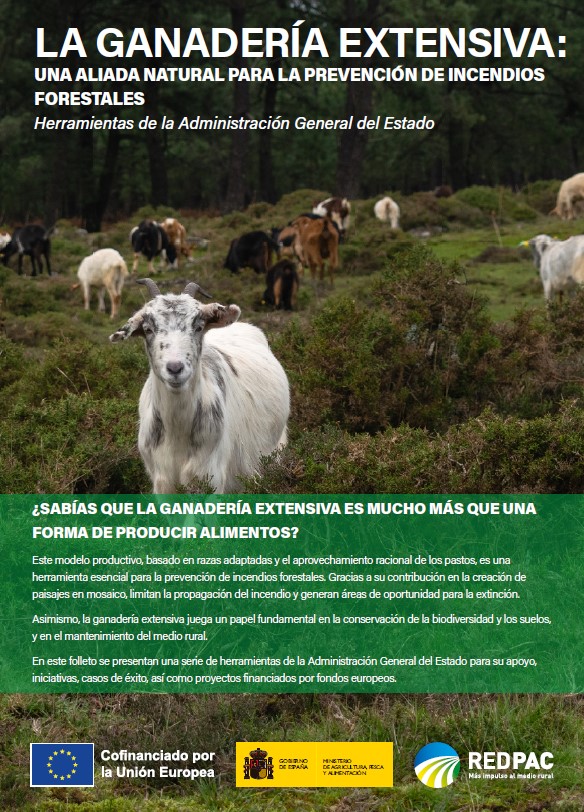 Extensive livestock farming plays a fundamental role in the conservation of biodiversity and soils, in the maintenance of the rural environment and in the prevention of fires. This brochure presents a series of tools from the General State Administration for your support, initiatives, success stories, as well as projects financed by European funds.
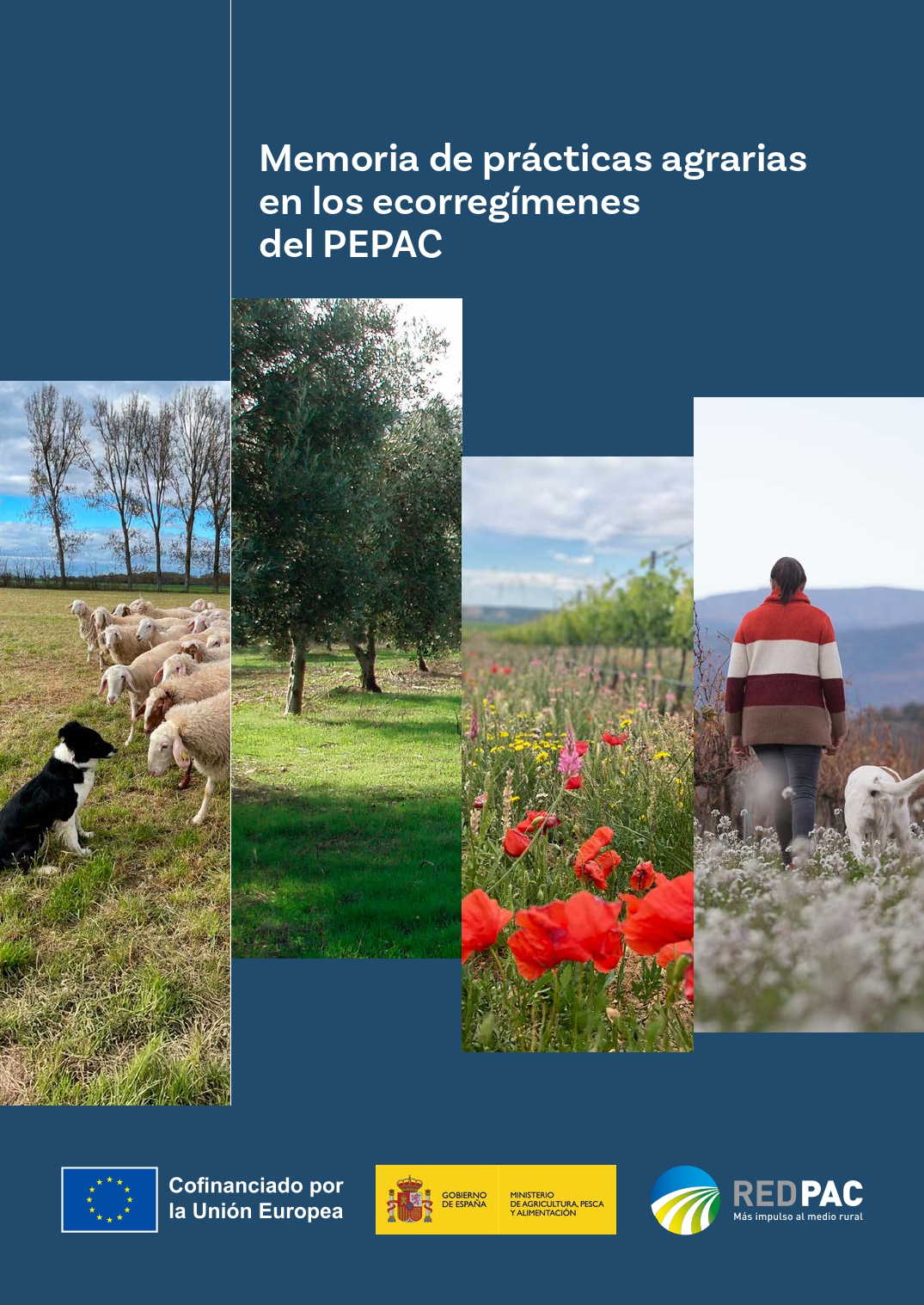 Eco-schemes promoting climate, the environment, and animal welfare—a major innovation in the current CAP period—are gaining traction in Spanish agriculture. Their voluntary adoption is demonstrating both environmental and economic benefits for farmers and livestock breeders who have embraced associated practices (crop rotations, no-till farming, cover crops, extensive grazing, sustainable mowing, etc.). This report discusses several of these practices, accompanied by articles from four experts and a summary of requirements.
-
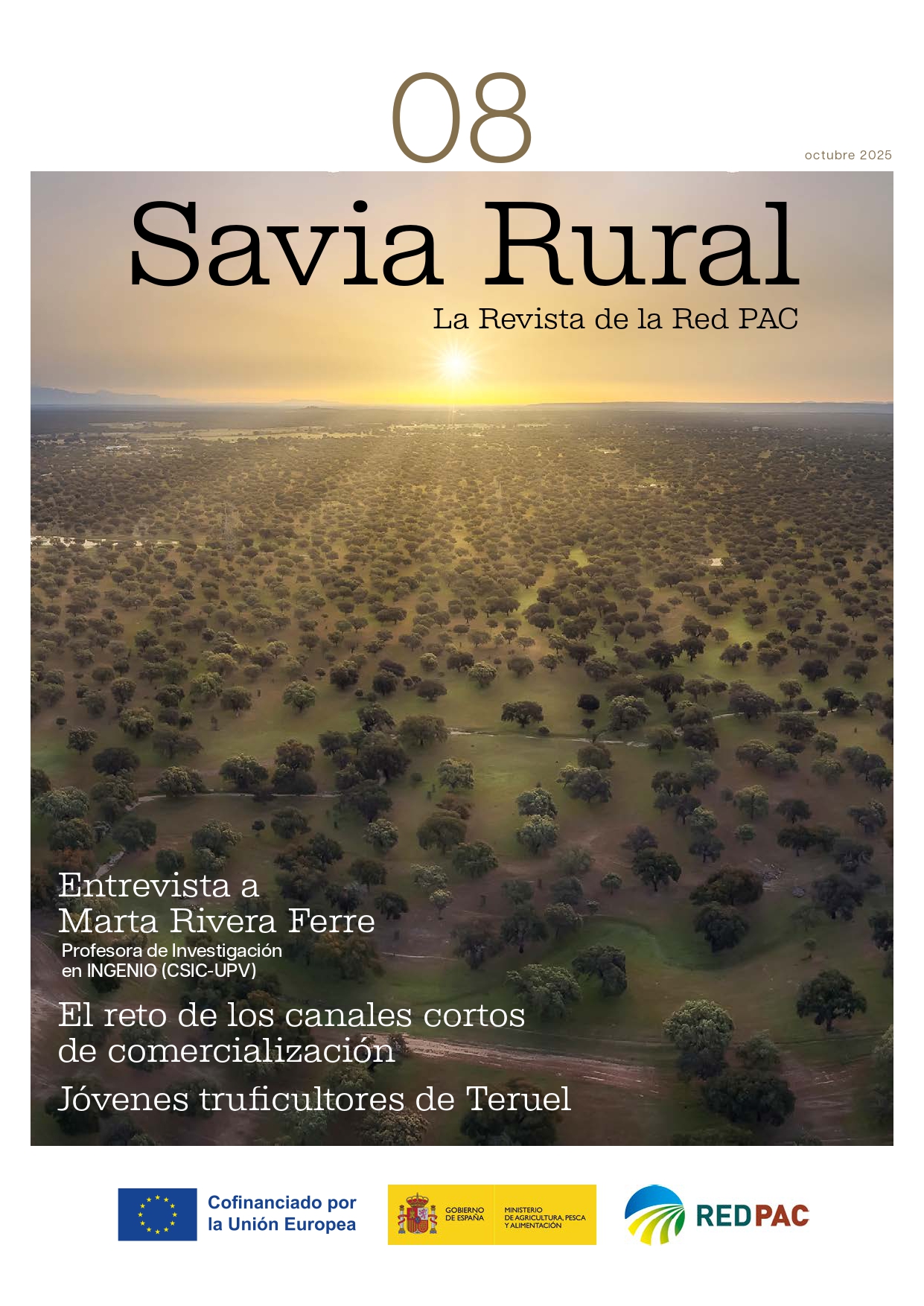 Savia Rural Magazine, No. 8, Fall 2025
 -
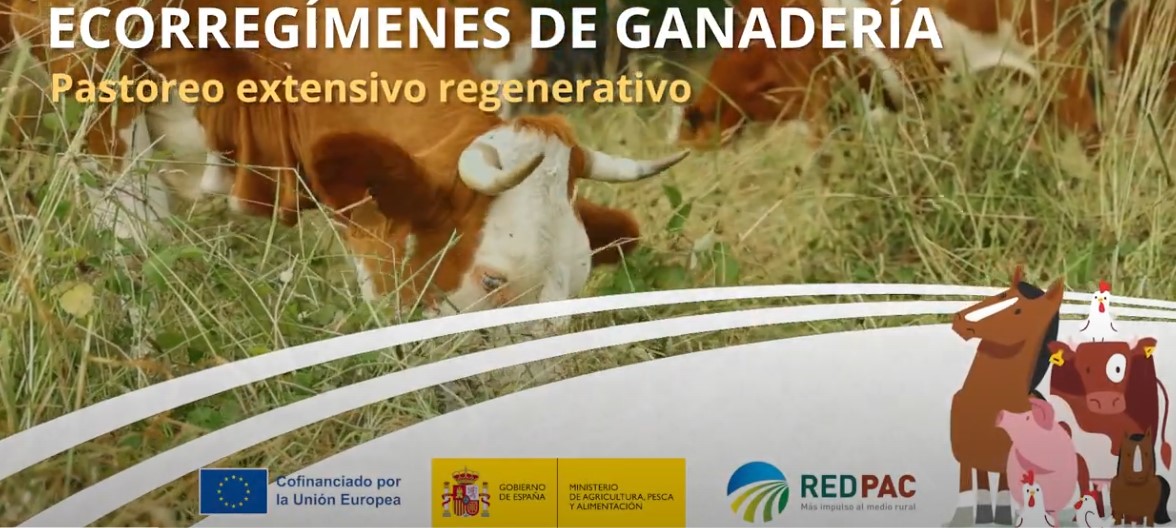 🐄 How can extensive livestock farming protect the environment and access European aid? Ecoregimes are voluntary practices that improve environmental and climate performance in the countryside. In this CAP Network video, we show you two real-life examples applicable to extensive livestock farming: 👨🌾 Xosé García (Lugo): grazing with cows, pigs and poultry in different plots 👩🌾 Lucía Redondo (León): natural pasture cleaning with cows and mares 📌 These practices help to: ✅ Improve soils and increase carbon ✅ Reduce erosion and greenhouse gases ✅ Protect biodiversity and conserve natural…
 -
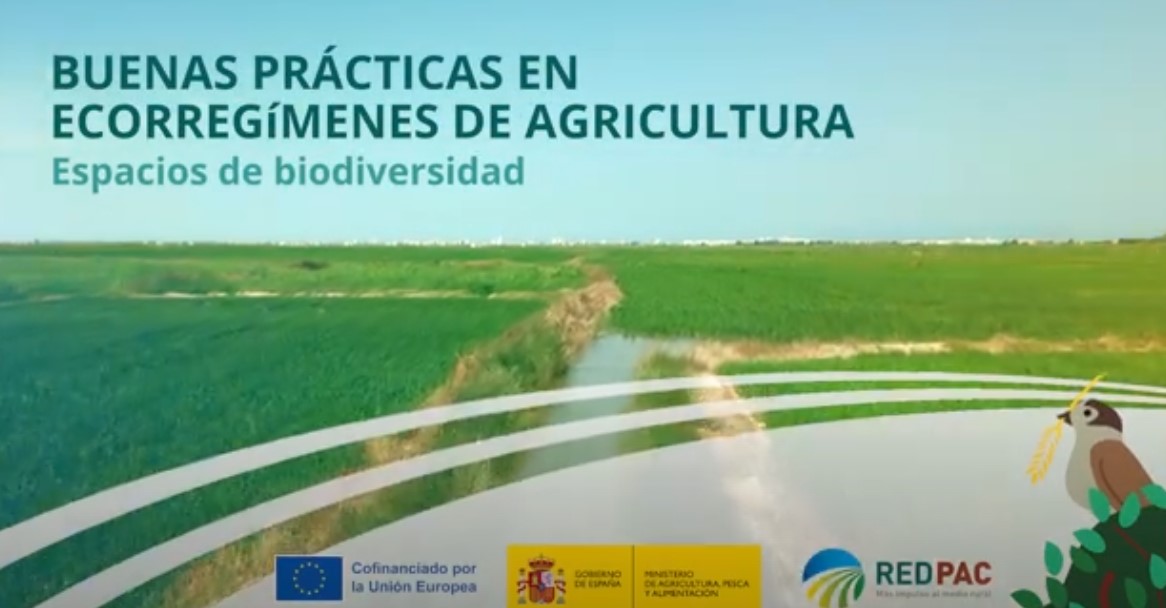 Did you know that you can take care of the environment and receive direct aid? Ecoregimes are voluntary practices that improve environmental and climate performance in the countryside. In this CAP Network video, we show you two real-life examples of good practices applicable to ecoregimes: 👩🌾 Ester Rubio (Teruel): crop rotation and biodiversity islands 🌾 Fernando Durà (Valencia): water sheets in rice fields to conserve biodiversity 📌 Discover how these actions help: ✅ Improve soils and increase carbon ✅ Reduce erosion and greenhouse gases ✅ Protect biodiversity and natural resources 🔔…